Cross Border Table Game Players and the Impact of Time Zone Changes on Bonus Rollover Periods
Ulrich Otto · Jul 30, 2026
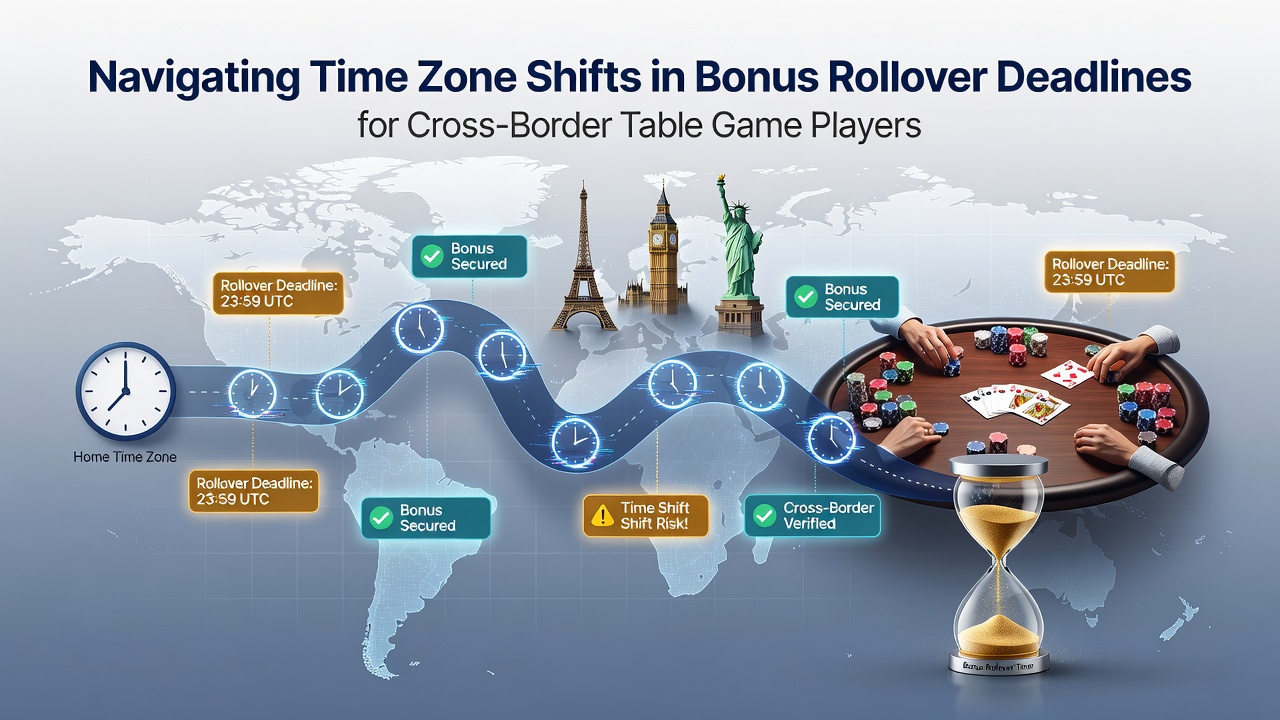
Cross Border Table Game Players and the Impact of Time Zone Changes on Bonus Rollover Periods
Table game enthusiasts who play across international borders encounter specific timing issues when bonus rollover deadlines align with varying global time standards, and these challenges intensify when operators base their cutoffs on server locations that differ from player time zones. Data from regulatory filings indicate that many platforms set deadlines using coordinated universal time, while players in regions such as North America or Asia Pacific track local clocks that can shift deadlines by several hours or even a full day.
Core Mechanics of Rollover Timing
Bonus rollover requirements specify the amount of play needed before withdrawal eligibility, and the clock starts at the moment of bonus activation on the platform's chosen time reference. Operators in regulated markets often publish their reference time in terms of UTC or a specific regional standard, yet players must convert these figures manually when traveling or connecting from distant locations. Research from industry reports shows that discrepancies arise most frequently during daylight saving transitions, when some jurisdictions advance clocks by one hour while others remain constant.
Those who study player session logs note that table game participants using blackjack or roulette variants sometimes miss deadlines because they calculate remaining time based on their local evening hours rather than the platform's fixed reference. In July 2026, several licensing updates scheduled for European and Asian markets will require operators to display both server time and at least two additional major time zones on bonus interfaces, a change expected to reduce conversion errors according to preliminary compliance guidelines.
Regional Examples and Observed Patterns
Players connecting from the eastern United States to platforms hosted in Southeast Asia face a difference that can exceed twelve hours, so a midnight server deadline might fall during the previous afternoon locally. Similar offsets appear when participants in Australia engage with operators using central European references, where the gap reaches eight or nine hours depending on the season. Figures from aggregated session data reveal that rollover completion rates drop noticeably among cross border participants during periods when these offsets cross midnight boundaries.
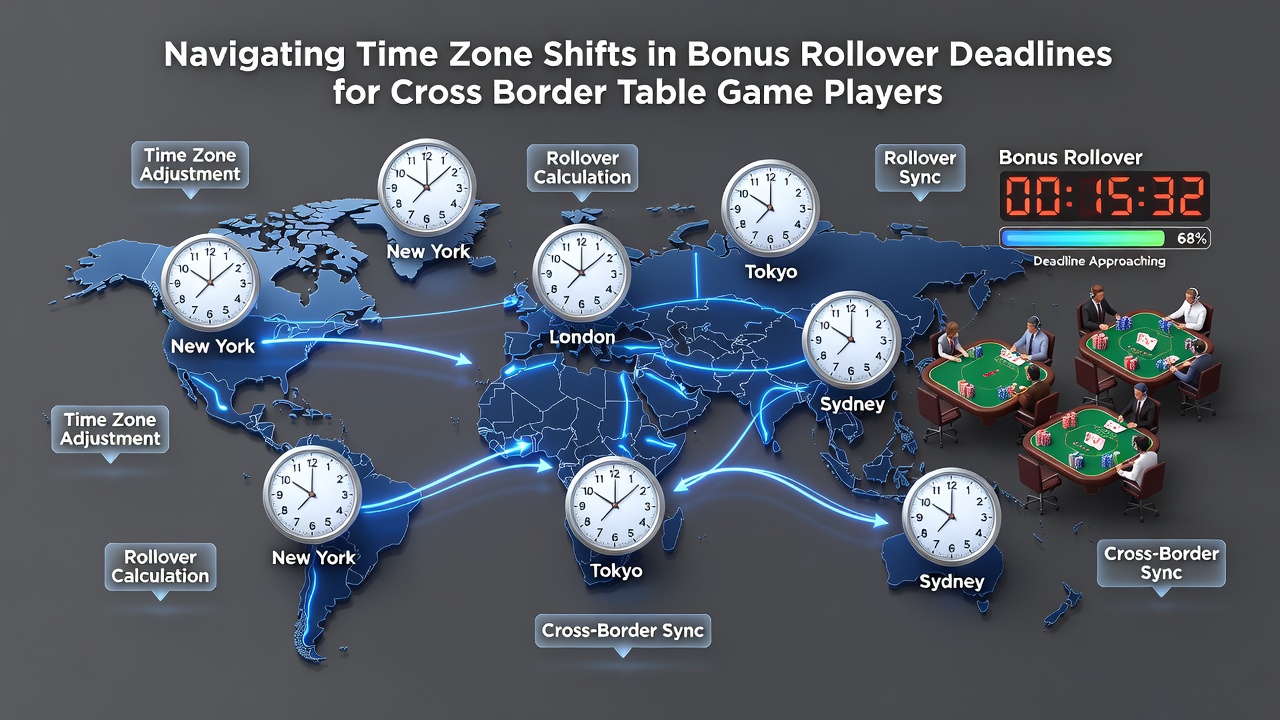
One documented case involved a group of table game regulars who maintained consistent play volumes yet experienced repeated deadline shortfalls until they adopted automated conversion tools tied to the specific operator's reference clock. Observers note that platforms serving multiple continents increasingly embed time zone selectors within player dashboards, allowing individuals to view remaining hours adjusted to their current location without separate calculations.
Practical Approaches Documented in Practice
Participants who succeed consistently maintain a dedicated log that records both the activation time in the platform's reference zone and the equivalent local time at their position. They then set personal alerts that account for the full offset rather than relying on device clocks alone. Data indicates that those who cross multiple zones within a single bonus period benefit from scheduling intensive play sessions immediately after activation, thereby completing requirements before additional travel alters the perceived deadline.
Regulatory bodies such as the European Gaming Regulators Association have published guidance encouraging operators to include clear offset information in all bonus terms, and similar recommendations appear in materials from the Nevada Gaming Control Board for operators handling international traffic. These documents emphasize that transparent display of reference times reduces disputes and supports compliance across jurisdictions.
Technology Tools and Emerging Standards
Software applications designed for global coordination now integrate directly with casino APIs in some markets, pulling the active bonus clock and converting it to the player's detected location. While adoption remains uneven, reports from platform analytics teams show higher completion percentages among users who enable these features. In regions preparing for the July 2026 licensing revisions, developers have begun testing interfaces that default to the player's most recent successful conversion setting, reducing the need for repeated manual adjustments.
Conclusion
Time zone management for bonus rollover deadlines represents a measurable operational factor for cross border table game participants, with documented effects on completion rates and player retention metrics. Platforms that provide multiple reference displays alongside regulatory requirements effective in mid 2026 appear positioned to minimize friction, while individuals who track offsets systematically maintain better alignment with stated deadlines regardless of their physical location.