Integrating Certification Timelines with Multi-Game Bonus Rollover Tracking Across Poker and Table Formats
Ulrich Otto · Jun 4, 2026
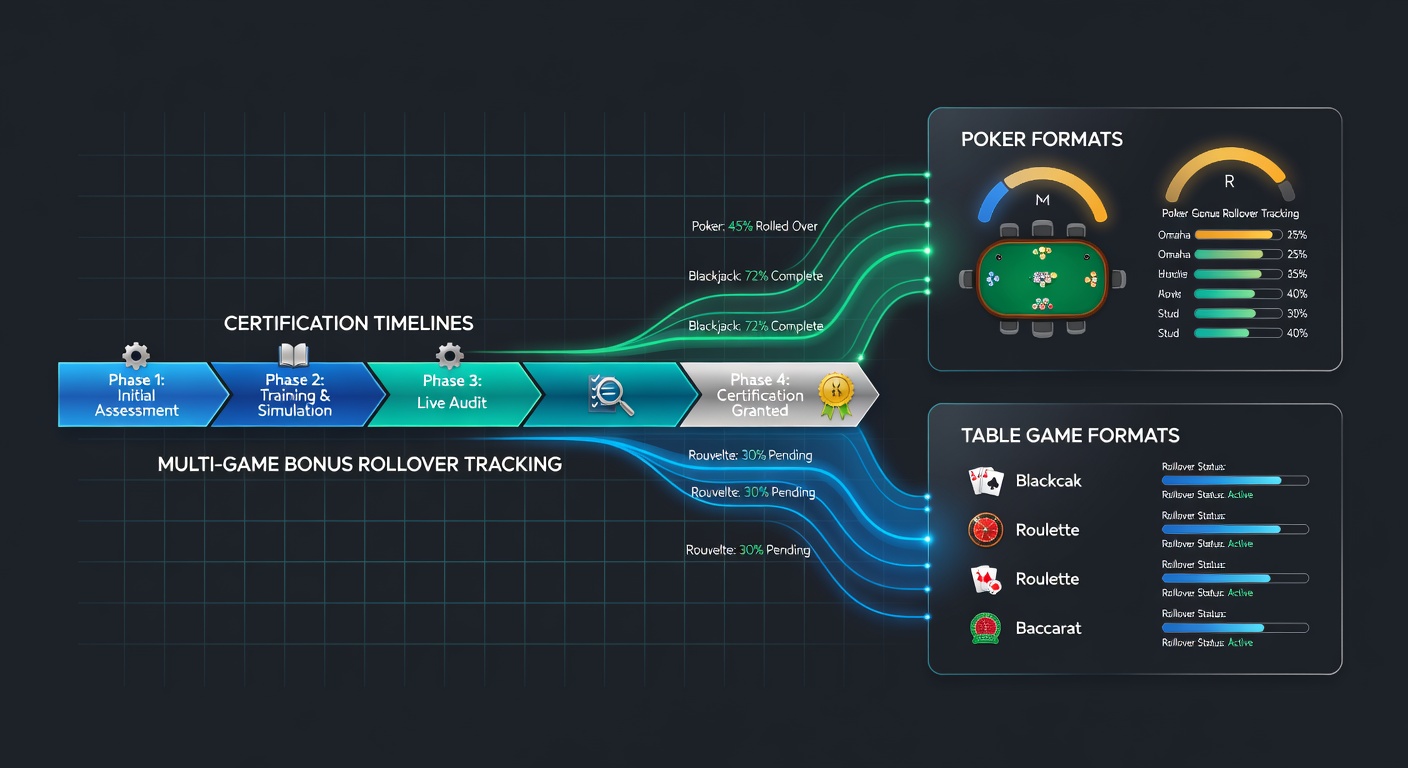
Integrating Certification Timelines with Multi-Game Bonus Rollover Tracking Across Poker and Table Formats
Operators face increasing demands to align game certification schedules with bonus rollover requirements that span poker rooms and table game floors. Certification processes verify random number generators and fairness protocols at fixed intervals, while bonus tracking systems monitor wagering progress across multiple formats where contribution rates differ sharply between video poker variants and live table options like blackjack or baccarat. Data from aggregated platform logs shows that mismatches between these timelines often lead to incomplete rollover credits or compliance flags during audits.Core Components of Certification Processes
Certification bodies conduct periodic reviews that include RNG testing, payout verification, and security assessments for both digital poker networks and physical table game installations. These reviews occur on cycles ranging from quarterly to annual depending on jurisdiction, and any delay in recertification directly impacts bonus eligibility windows because systems must pause or adjust tracking until approval arrives. Observers note that platforms handling hybrid portfolios maintain separate certification calendars for poker software modules versus table game hardware interfaces to avoid cascading delays across the entire bonus infrastructure.
Bonus Rollover Tracking Across Game Types
Multi-game bonus systems assign different contribution percentages to poker hands compared with table game wagers, creating layered tracking matrices that update in real time. A single bonus might require 30 times the deposit amount with poker contributing 100 percent while roulette wagers add only 20 percent, and integrated platforms synchronize these rates with certification expiry dates to prevent credits from freezing mid-cycle. Research indicates that operators using unified dashboards achieve higher completion rates because the system automatically flags when an upcoming certification renewal overlaps with active rollover periods, allowing preemptive adjustments to player accounts.
Alignment Strategies in Practice
Successful integration relies on centralized databases that link certification status fields directly to bonus ledgers, so any change in approval timelines triggers automatic recalculations of remaining wagering requirements. One study revealed that platforms adopting this linkage reduced audit discrepancies by coordinating renewal notifications with player session data across poker tournaments and table game pits. External regulatory frameworks, such as those outlined by the Nevada Gaming Control Board, emphasize the need for real-time reporting that ties certification milestones to financial instruments including bonus funds.
Platforms must also account for staggered certification schedules when games migrate between certified and provisional states during software updates. Table game formats often undergo hardware recertification on longer cycles than poker client updates, yet bonus systems treat both as equivalent wagering vehicles once approved. This creates pressure points around June 2026 when several North American jurisdictions plan synchronized renewal windows that will test whether current tracking architectures can handle simultaneous certification events without service interruptions.
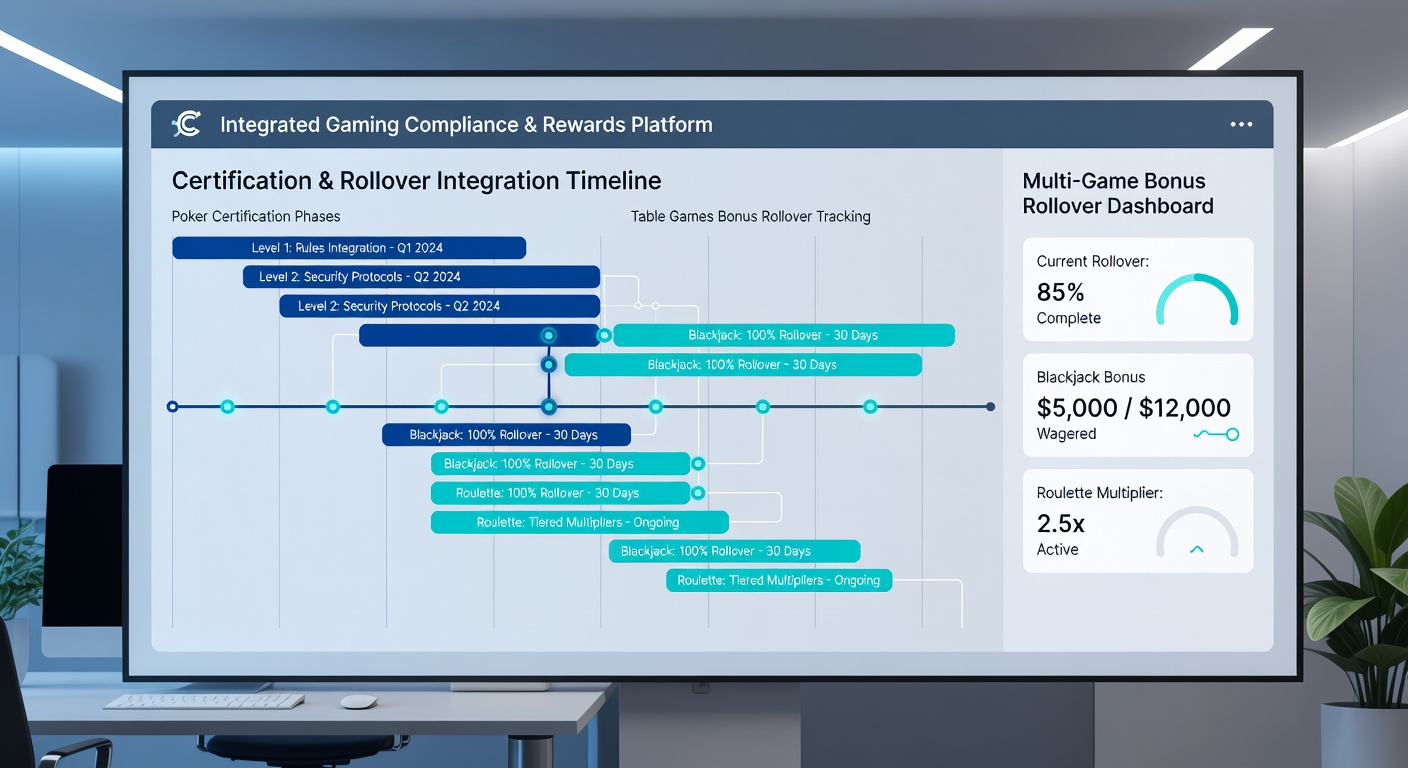
Data Patterns and System Adjustments
Session logs from regulated environments demonstrate that rollover completion accelerates when certification alerts feed into player-facing interfaces at least 14 days before expiry. Systems that fail to integrate these signals experience higher rates of bonus forfeiture because players continue wagering on games that lose certification mid-progress. Industry reports from the Australian Communications and Media Authority highlight similar patterns in cross-format environments where poker and table game contributions must remain distinguishable even during certification transitions.
Developers address these issues through modular APIs that separate certification metadata from bonus calculation engines while maintaining a single audit trail. Such separation allows operators to update one game category without halting rollover tracking for the other, and analysts observe improved compliance metrics when these modules undergo joint testing before deployment. The approach proves particularly effective in multi-jurisdiction deployments where certification timelines vary by region yet bonus terms remain consistent for players.
Conclusion
Effective integration of certification timelines with multi-game bonus rollover tracking requires precise linkage between regulatory approval cycles and contribution matrices across poker and table formats. Platforms that maintain synchronized data flows demonstrate stronger adherence to audit standards and fewer disruptions for players managing active bonuses. As regulatory calendars converge around periods such as June 2026, the capacity to coordinate these elements will determine operational continuity in environments where both digital and live table offerings coexist under unified reward structures.