Mapping Volatility Curves in Hybrid Slot-Table Portfolios: Data Patterns From Aggregated Session Logs Across Regulated Platforms
Elena Keller · May 16, 2026

Mapping Volatility Curves in Hybrid Slot-Table Portfolios: Data Patterns From Aggregated Session Logs Across Regulated Platforms
Analysts in the gaming sector have turned increasing attention to volatility curves that emerge when slot machines and table games operate together in hybrid portfolios, and aggregated session logs from regulated platforms provide the raw material for these mappings. These curves track how returns fluctuate over time, revealing patterns that operators use to adjust game mixes and risk exposure. Data compiled across multiple jurisdictions shows consistent structures in the way volatility behaves when high-frequency slot sessions combine with lower-frequency table game activity, particularly in environments where session tracking occurs at scale.
Building the Data Foundation
Regulated platforms maintain detailed logs that capture bet sizes, outcomes, session durations, and player transitions between game types, and these records form the basis for curve construction. Researchers aggregate millions of sessions from sources that span North American and European markets, then apply statistical smoothing techniques to isolate underlying volatility trends from random noise. In May 2026, several major platforms began releasing standardized log formats that allow cross-border comparisons, which has accelerated the ability to identify shared patterns in how volatility shifts during peak and off-peak periods.
One clear observation involves the interaction between slot volatility spikes and table game stability, because players often move between these categories within the same visit. Session data indicates that when slot play dominates early in a session, overall portfolio volatility rises sharply before settling as table games enter the mix, whereas the reverse sequence produces more gradual curve movements. These transitions appear repeatedly across datasets from different regions, suggesting structural rather than location-specific behaviors.
Identifying Recurring Curve Shapes
Volatility curves in hybrid portfolios typically display an initial ascent, a plateau phase, and a tapering decline, yet the duration and height of each segment vary with portfolio composition. Aggregated logs reveal that portfolios weighted toward progressive slots show steeper early rises compared with those balanced by blackjack or roulette tables, while the plateau length correlates with average session length reported in the records. Canadian regulatory summaries and Australian industry reports both document similar plateau characteristics when data sets exceed several hundred thousand sessions, which points to repeatable dynamics rather than isolated anomalies.
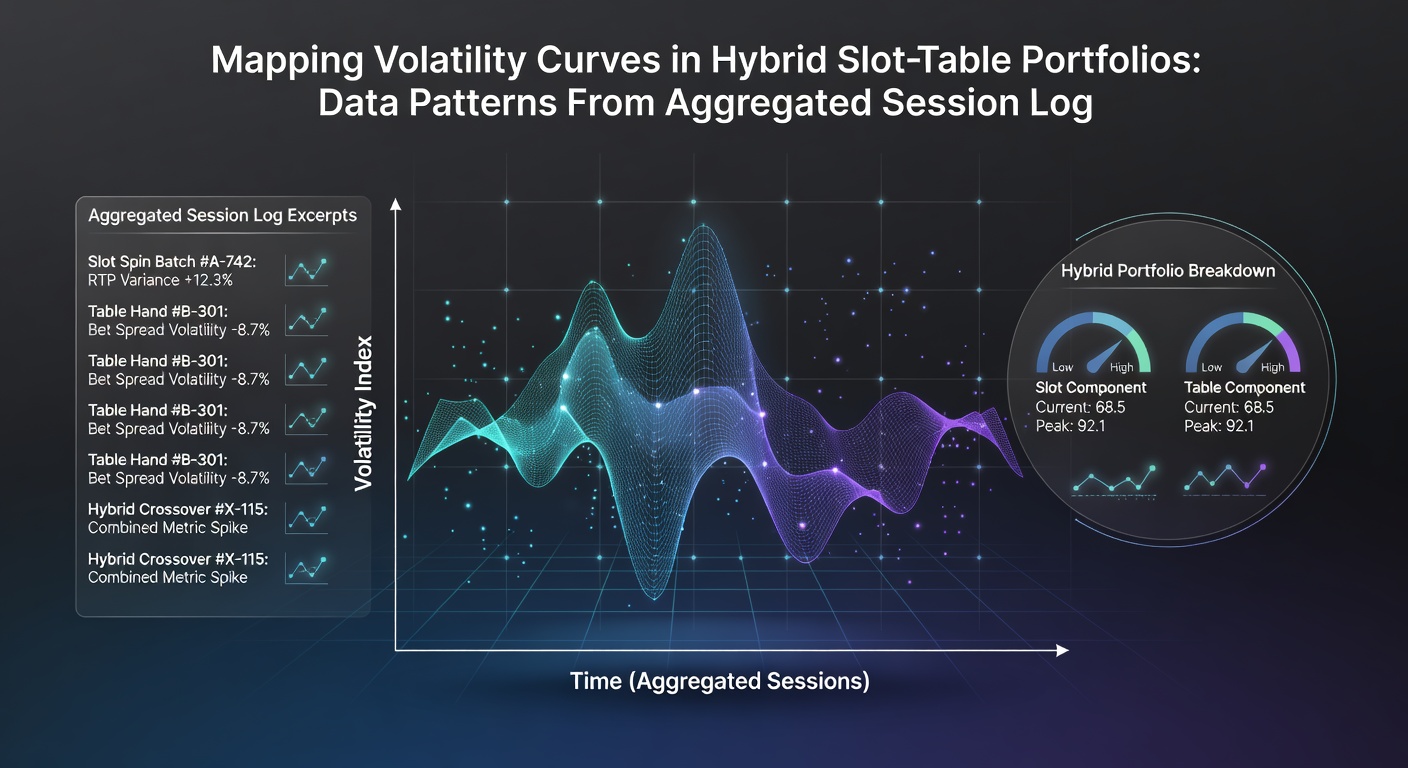
Further examination shows that time-of-day effects influence the tapering segment, because evening sessions often extend longer and produce extended low-volatility tails. Data aggregated from platforms operating under Nevada Gaming Control Board oversight demonstrates that these tails lengthen when table game occupancy increases, which dampens the overall curve slope. Similar lengthening appears in logs from European operators, although the timing of the effect shifts according to local peak hours.
Regional Variations and Common Threads
Despite regulatory differences, certain volatility signatures persist across borders. For instance, portfolios that include both video slots and live dealer tables display a characteristic mid-curve dip when player migration occurs from slots to tables, and this dip registers consistently in aggregated records from New Jersey and Ontario markets. The magnitude of the dip scales with the proportion of table game activity, a relationship confirmed through regression analysis performed on combined data sets.
What's notable is how quickly these patterns stabilize once sufficient session volume accumulates, because even quarterly aggregates begin to mirror multi-year curves after filtering for seasonal effects. Industry groups such as the European Gaming and Betting Association have highlighted the value of such stabilized curves for cross-platform benchmarking, noting that operators gain clearer signals about risk concentration when they align internal logs with external reference sets.
Practical Applications of the Mapped Curves
Operators apply these mapped curves to calibrate floor layouts and promotional timing, since the data indicates specific windows where volatility peaks align with higher player engagement. Session logs show that introducing table game incentives during the plateau phase can flatten subsequent curve segments, which in turn affects capital allocation decisions. Academic studies from institutions tracking gaming mathematics have corroborated these adjustments by modeling the same log-derived curves under controlled scenarios.
Another observed pattern concerns weekend versus weekday divergence, because weekend sessions produce higher initial volatility that resolves more slowly. Aggregated records from multiple platforms confirm this divergence holds after controlling for player demographics, which suggests the effect stems from session composition rather than external factors alone.
Conclusion
The mapping of volatility curves through aggregated session logs continues to yield consistent structural insights across regulated environments, and the patterns identified in hybrid slot-table portfolios provide operators with measurable benchmarks for portfolio management. As data sharing protocols expand in 2026 and beyond, these curves are expected to incorporate additional variables while retaining the core shapes already visible in current aggregates. Continued analysis of these records supports more precise understanding of how different game types interact within single sessions, delivering factual foundations for ongoing refinement in the sector.