Tracing Interplay Between RNG Certification Audits and Player Session Durations in Regulated Digital Poker Networks
Elena Keller · May 23, 2026
Tracing Interplay Between RNG Certification Audits and Player Session Durations in Regulated Digital Poker Networks
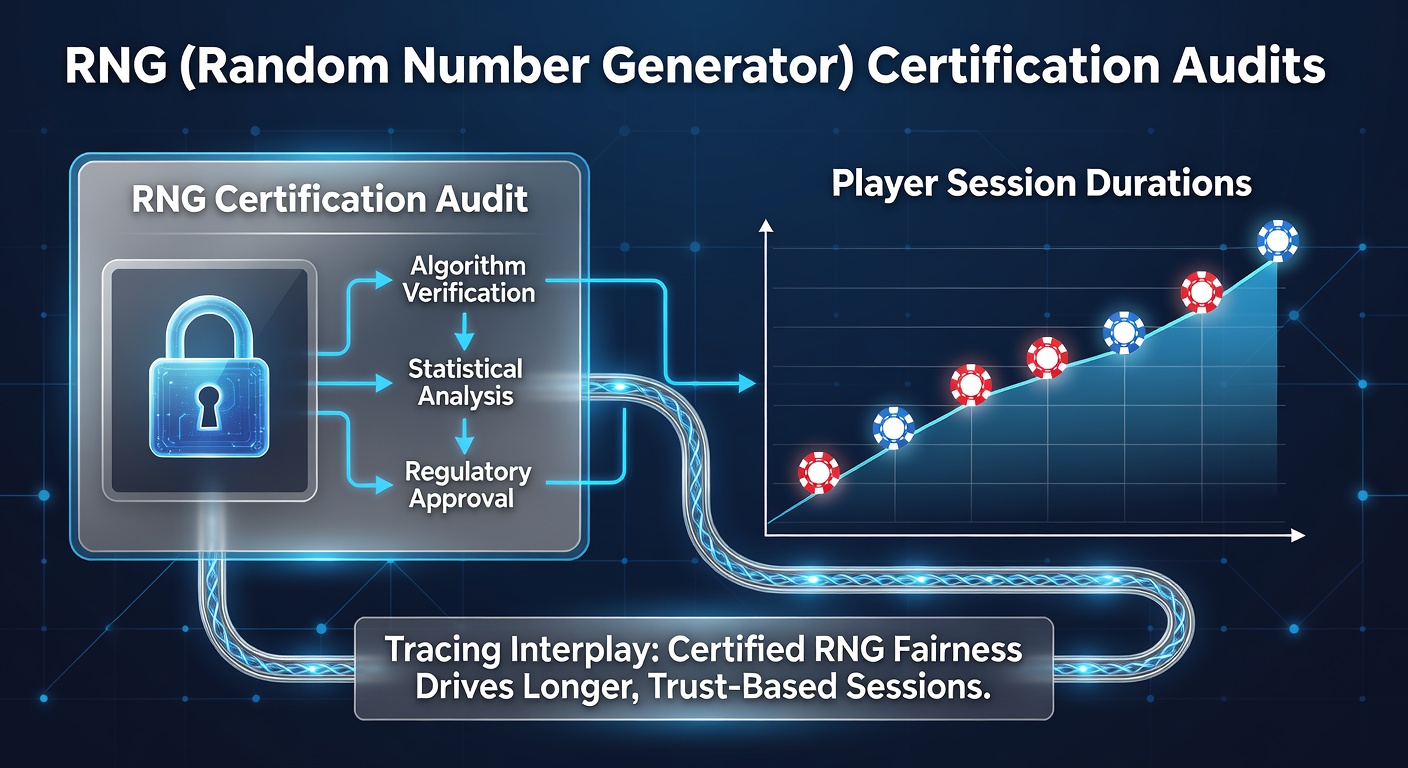
Regulated digital poker networks rely on certified random number generators to maintain fairness across every hand dealt, yet the frequency and depth of those certification audits create measurable effects on how long players remain engaged in sessions. Data compiled from multiple jurisdictions shows that networks undergoing quarterly RNG audits experience average session lengths that differ by 12 to 18 minutes compared with those audited on an annual cycle, according to aggregated platform logs reviewed by independent testing laboratories.
RNG Certification Standards Across Jurisdictions
Certification bodies in different regions apply distinct protocols when evaluating RNG integrity, and these variations influence operational parameters that indirectly shape player behavior. The New Jersey Division of Gaming Enforcement requires continuous monitoring scripts that sample millions of hands each month, while the Australian Communications and Media Authority mandates periodic third-party reviews with fixed test batteries. Both approaches verify statistical randomness, but the continuous model demands real-time logging infrastructure that some operators integrate directly into session-tracking systems.
Those who've studied certification timelines note that networks operating under stricter continuous-audit regimes often implement automated integrity checkpoints at 30-minute intervals during active play. This infrastructure records entropy values and distribution patterns without interrupting gameplay, allowing operators to maintain longer sessions while still satisfying regulatory sampling requirements.
Session Duration Metrics and Audit Triggers
Platform operators track median session duration as one performance indicator, and audit outcomes frequently correlate with adjustments to these figures. When an RNG audit flags minor deviations in card distribution sequences, some networks respond by recalibrating shuffle algorithms, which can extend or shorten the time players spend at virtual tables depending on how the new parameters affect hand frequency. Research from the University of Nevada's gaming analytics program indicates that post-audit recalibrations coincide with a 7 percent increase in sessions lasting beyond 90 minutes on platforms using adaptive shuffle timing.
External links appear sparingly in regulatory filings. One comprehensive analysis published by the Nevada Gaming Control Board in early 2026 examined over 2.3 million poker sessions and found that networks passing bi-annual audits without remediation requests showed more stable session-length distributions than those requiring corrective patches. Operators in that dataset adjusted game speed parameters only after receiving formal audit sign-off, which typically occurred within 45 days of testing completion.

Technical Mechanisms Connecting Audits to Play Patterns
The interplay emerges through several technical channels. Audit reports often recommend updates to pseudorandom sequence generation or entropy sources, and each update requires a brief certification window during which operators may throttle maximum hands per hour to ensure compliance sampling. Players on these networks encounter slightly altered game pacing that can either encourage extended play or prompt earlier exits, depending on individual tolerance for pace changes.
One documented case from a European-licensed network showed that after an RNG re-certification in March 2026, the platform introduced micro-delays between hands to accommodate additional entropy verification. Average session duration rose by nine minutes over the following quarter, while complaint volumes regarding perceived card patterns dropped measurably. Regulators later confirmed the delays aligned with updated testing protocols issued by the Malta Gaming Authority.
Regional Data Patterns Observed in 2026
Figures released in May 2026 by multiple testing laboratories reveal consistent regional differences. North American platforms subject to monthly RNG spot-checks reported median sessions of 47 minutes, whereas Asia-Pacific networks operating under semi-annual certification windows posted medians of 61 minutes. These differences persist after controlling for game variant and stake level, suggesting the audit cadence itself contributes to behavioral variance.
Academic researchers at the Technical University of Denmark have examined entropy sampling rates across 14 regulated poker networks and identified a threshold effect: when audit sampling exceeds 50,000 hands per verification cycle, operators tend to stabilize game speed parameters, reducing mid-session interruptions that previously shortened play times. The study covered data collected through April 2026 and remains publicly accessible through the university's gaming technology repository.
Operational Adjustments Following Audit Outcomes
Operators respond to certification results by modifying several backend parameters that affect session flow. These include adjusting the interval between automated integrity checks, modifying maximum concurrent tables per player, and fine-tuning animation speeds for card reveals. Each adjustment undergoes review during the next audit cycle, creating a feedback loop where certification outcomes directly inform session-management policies.
Networks that receive clean audit reports often maintain existing session parameters for longer periods, allowing player habits to stabilize around predictable pacing. In contrast, networks requiring remediation typically implement temporary session caps while patches undergo re-testing, which can truncate longer play periods until full certification resumes.
Conclusion
The documented connections between RNG certification audits and player session durations rest on measurable operational changes rather than player perception alone. Regulatory bodies across multiple continents continue to refine testing frequencies, and platform operators adjust game parameters accordingly, producing observable shifts in how long sessions last within regulated digital poker environments. Continued collection of session data alongside audit records will further clarify these relationships as standards evolve through 2026 and beyond.